At a glance
The Strategic Training Executive Programme (STEP) 2.0 is a professional development programme for public-sector health supply chain leaders. It is funded by Gavi, the Global Fund, the IFPW Foundation and UNICEF. Since 2016, more than 800 officials from 33 low- and middle-income countries have graduated from it.
In Bolivia, the CHMP, holder of a UNICEF long-term agreement (LTA) for Lot 9 – Supply Chain Workforce in Latin America and the Caribbean, leads delivery together with its technical partner Bee Skilled Global. This is the first STEP 2.0 cohort in Latin America and the first delivered in Spanish.
Context
The immunization supply chain is a pillar of Bolivia’s National Health Plan 2026–2030, but it is under strain:
- a sustained measles outbreak and declining vaccination coverage;
- the progressive transition away from Gavi financing, which calls for stronger national planning;
- road blockades lasting more than a month in 2026, which caused vaccine stock-outs in several departments and forced emergency air transport;
- logistics data spread across systems with limited interoperability.
The PAI itself has made human resource strengthening an investment priority for 2026–2030, and STEP 2.0 is part of its supply chain strengthening roadmap.
Objectives
- Train around 30 managers from the national, departmental (SEDES) and municipal levels in leadership and change management.
- Measure participants’ progress across the five STEP competency domains: Lead, Shape, Plan, Act, Evaluate.
- Have each team take on a “Transformation Challenge”: a real immunization supply chain problem, addressed within its own sphere of influence.
- Give the PAI and SEDES a group of change agents able to improve the supply chain from within.
A five-phase approach
- Set-up: participant selection with the Ministry of Health and Sports, pairing with volunteer private-sector coaches, adaptation of materials into Spanish, launch of the learning platform.
- Participant preparation: online self-assessments on The HIVE platform, in Spanish and designed for low bandwidth.
- Workshop: five in-person days built around Lead, Shape, Plan, Act and Evaluate, with Bolivian case studies.
- Transformation Challenge: three to four months of hands-on application in the institutions, with monthly check-ins and coach support.
- Close-out: graduation ceremony in Bolivia, final report, evaluation and a lessons-learned document for future cohorts in the region.
Cases built for Bolivia
The five Transformation Challenges were chosen with UNICEF and the PAI, based on the weak points identified in the PAI’s 2026 supply chain maturity assessment:
- supply chain performance management;
- data management for decision-making;
- cold chain and quality control;
- standard operating procedures and continuous improvement;
- transport, distribution and last mile.
During the workshop, eight Bolivian case studies fed the technical sessions: vaccines held up by road closures, vaccine customs release, national storage capacity, planning during the measles outbreak, sharing the cold chain burden with municipalities, and more.
Where things stand
- September 2026: kick-off meeting with UNICEF, followed by a meeting with PAI officials.
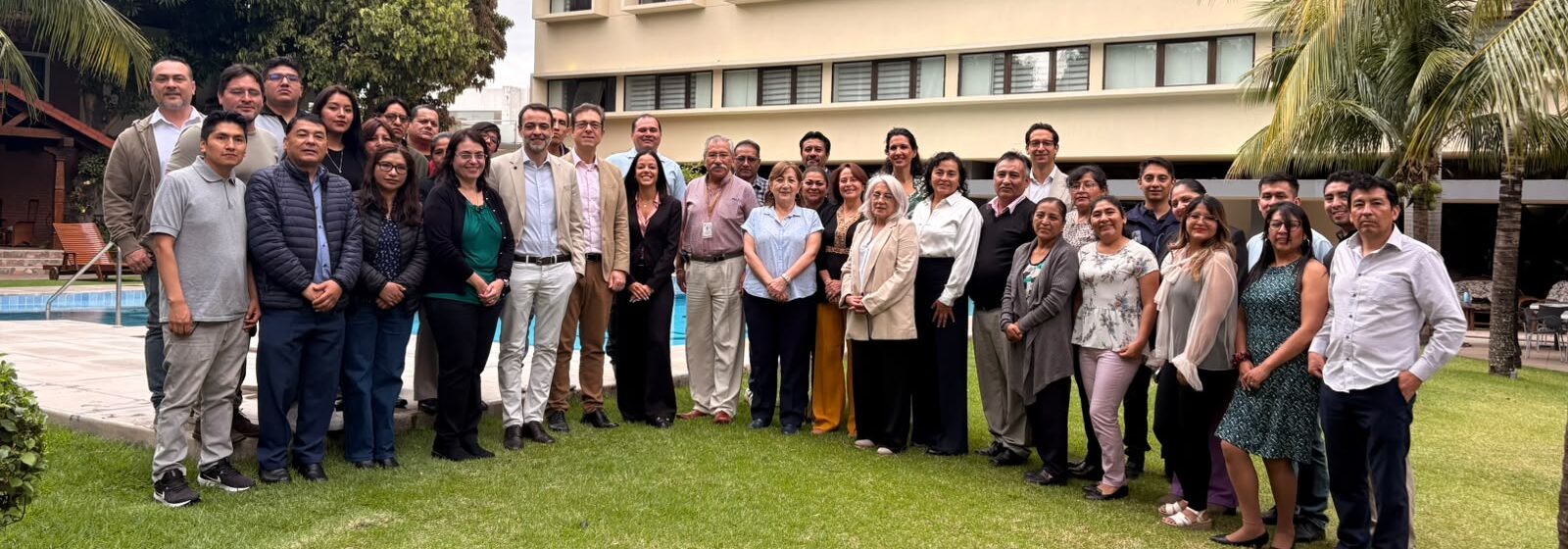
- October 2026: 32 participants in 5 teams, 5 coaches from the pharmaceutical industry mobilised by the IFPW Foundation. All 32 participants completed the preparation phase.
- 19 to 23 October 2026: in-person workshop in Santa Cruz.
- November 2026 to February 2027: Transformation Challenges under way in the institutions.
- Early 2027: close-out and graduation (indicative schedule).
Partners
- UNICEF: Latin America and Caribbean Regional Office (LACRO) and Bolivia Country Office, commissioning the assignment
- Bolivia’s Ministry of Health and Sports and the PAI: national counterpart and owners of the Transformation Challenges
- Bee Skilled Global: the CHMP’s technical partner, The HIVE learning platform
- IFPW Foundation: manages STEP 2.0 and mobilises the private-sector coaches